Why Filmmaking Needs Three Years to Master: Beyond Short-Term Courses and Diplomas

Filmmaking is not just about operating a camera or editing a video. It is a complex, collaborative and highly technical art that requires years of structured learning, repeated practice, creative exploration and professional mentorship.
Filmmaking is not just about operating a camera or editing a video. It is a complex, collaborative and highly technical art that requires years of structured learning, repeated practice, creative exploration and professional mentorship.
Filmmaking Is an Art That Cannot Be Compressed into a Few Months
The magic of cinema lies in the seamless integration of creativity, technology, storytelling and teamwork. Behind every compelling film is a complex process involving scripting, cinematography, lighting, sound recording, direction, production management, editing and post-production. Each of these disciplines requires specialised knowledge, technical precision and practical experience.
While a six-month or one-year course can introduce students to the fundamentals of filmmaking, it is impossible to develop comprehensive professional competence across its many disciplines within such a limited period. Understanding a camera is only the beginning. Knowing how to use it creatively under changing lighting conditions, direct a moving subject, capture clean sound in a challenging environment, manage a production crew and translate a script into compelling visuals requires sustained practice and guided experience.
Filmmaking is not a skill that can be mastered through a handful of demonstrations. It is a discipline that develops progressively through learning, experimentation, mistakes, feedback and repeated application.
The Many Dimensions of Filmmaking
Professional filmmaking involves a wide range of interconnected skills, each presenting its own technical and creative challenges.
1. Cinematography and Camera Techniques
A filmmaker must understand far more than basic camera operation. Focus pulling, panning, tilting, tracking, dolly movements, crane shots, multi-camera configurations and capturing motion require technical knowledge and precise execution. Students must learn to make appropriate choices based on the scene, narrative, subject movement and intended visual effect.
2. Lighting for Different Environments
Lighting is one of the most demanding aspects of filmmaking. A scene shot in natural daylight presents very different challenges from one filmed indoors, at night or on a controlled set.
Students need exposure to different lighting instruments and configurations, ranging from smaller studio lights and practical lighting arrangements to high-intensity HMI systems. They must learn to shape light, control shadows, manage colour temperature and maintain continuity across shots. Understanding lighting requires repeated demonstrations and practical exercises across different sets, locations and shooting conditions.
3. Sound Recording and Audio Management
Good filmmaking depends as much on sound as it does on visuals. Recording dialogue indoors and outdoors, managing ambient noise, selecting microphones, monitoring audio levels and reducing unwanted sound interference are essential skills.
Students must also understand sound editing, synchronisation, dialogue clarity, sound design and audio mixing. These competencies develop through practical exposure to different recording environments and production challenges.
4. Pre-Production and Script Development
Every successful production begins long before the camera starts rolling. Scriptwriting, story development, storyboarding, shot division, budgeting, scheduling, location scouting, permissions, casting and production planning determine how effectively a film can be executed.
Students must learn to anticipate on-field challenges, manage limited resources and adapt their plans when real-world conditions change.
5. Production and On-Field Problem-Solving
Filmmaking rarely unfolds exactly as planned. Weather conditions, location restrictions, equipment limitations, changing light, sound disturbances and coordination challenges require quick thinking and practical decision-making.
Such capabilities cannot be developed through classroom instruction alone. They require supervised shoots, real-time problem-solving and repeated exposure to diverse production environments.
6. Post-Production and Editing
Post-production involves much more than cutting clips together. Students must develop an understanding of narrative editing, continuity, colour correction, colour grading, sound synchronisation, visual effects, compositing and delivery formats.
Working with different editing and post-production software, managing large media files and handling multi-camera footage also require dedicated practice. Students need sufficient time to experiment with workflows and refine their creative decisions.
7. Diverse Film Formats and Production Setups
A documentary requires a different approach from an advertisement, a short film or a feature film. Podcast recordings, interviews, music videos and multi-camera productions each demand different technical configurations and storytelling techniques.
Exposure to these formats helps students understand how production methods change according to the intended audience, budget, narrative and platform.
The breadth of these disciplines makes one thing clear: filmmaking education requires a carefully structured progression rather than a rushed introduction to multiple techniques.
Why a Three-Year Undergraduate Programme Makes a Difference
A three-year undergraduate programme provides the time and structure needed to progress from foundational knowledge to intermediate application and advanced creative practice.
Rather than attempting to teach every technique in a compressed period, a well-designed programme introduces skills progressively, allowing students to practise, receive feedback, revisit concepts and apply their learning to increasingly complex productions.
The progression from foundation to professional practice
Year 1 – Foundations and Exploration
Students develop their understanding of visual language, composition, camera operation, exposure, basic lighting, sound, storytelling and introductory editing. They experiment with simple visual narratives and mute films, learning how images can communicate meaning without dialogue.
Year 2 – Application and Technical Development
Students build on their foundational skills through more demanding assignments involving cinematography, advanced lighting, sound recording, script development, production planning and post-production. They progress towards short films, interviews, advertisements and documentary exercises, learning to coordinate different aspects of a production.
Year 3 – Advanced Production and Professional Readiness
Students undertake more comprehensive projects, including documentary films, advertising films and short films. They develop greater independence in planning productions, coordinating teams, solving technical challenges and refining their creative vision. Portfolio development, industry interactions and professional feedback further support their transition into the field.
This progression allows students to revisit the same concepts at increasingly sophisticated levels. Lighting, for instance, may begin with basic exposure and simple setups before advancing to complex multi-light arrangements, location lighting and continuity across scenes.
Similarly, editing progresses from basic cuts and sequencing to narrative structure, pacing, colour grading and sound design.
The objective is not merely to expose students to filmmaking techniques, but to help them understand, apply and progressively refine those techniques.
Three-Year Degree vs. Short-Term Diploma: Understanding the Difference
Short-term courses and diploma programmes serve valuable purposes. They can introduce beginners to filmmaking, provide focused training in a particular skill or help working professionals upgrade their technical knowledge. However, their scope and learning outcomes may differ considerably from those of a comprehensive undergraduate degree.
| Learning Dimension | Short-Term Course / Diploma | Three-Year Undergraduate Degree |
|---|---|---|
| Learning duration | Limited time for instruction and practice | Extended period for progressive learning and practice |
| Curriculum scope | Often focused on selected skills or specific disciplines | Can integrate cinematography, lighting, sound, scripting, production and post-production |
| Skill development | Introductory or specialised competence, depending on the programme | Opportunities to develop diverse skills from foundational to advanced levels |
| Practical exposure | Depends on course structure, facilities and project opportunities | Can provide sustained practical assignments across multiple semesters |
| Film projects | Often limited to a few exercises or selected project formats | Can support progression from basic visual exercises to short films, documentaries and advertising films |
| Mentorship | Varies according to the course and faculty engagement | Can provide continuing faculty mentorship and feedback over multiple years |
| Industry exposure | Depends on the provider and programme | Can incorporate industry experts, workshops, study tours and professional interactions |
| Creative development | Basic learning within a shorter timeframe | More time for experimentation, reflection, portfolio development and refinement |
| Academic qualification | Depends on the credential awarded | A recognised undergraduate degree, subject to the institution's applicable approvals |
| Career preparation | May support entry into a specific role or technical specialisation | Can provide broader preparation for diverse roles across film and media production |
The key distinction is not simply the number of years spent studying. It is the depth of the curriculum, continuity of mentorship, quality of infrastructure, diversity of practical assignments and opportunity to learn from mistakes.
A well-designed three-year undergraduate programme BA in film making can provide a broader and more sustained foundation for developing a versatile filmmaking professional.
When comparing filmmaking schools in India, students should look at the curriculum, studio facilities, equipment, faculty expertise, industry interaction and opportunities to create original work—not just the duration or title of a programme.
How SSVAP Approaches Filmmaking Education
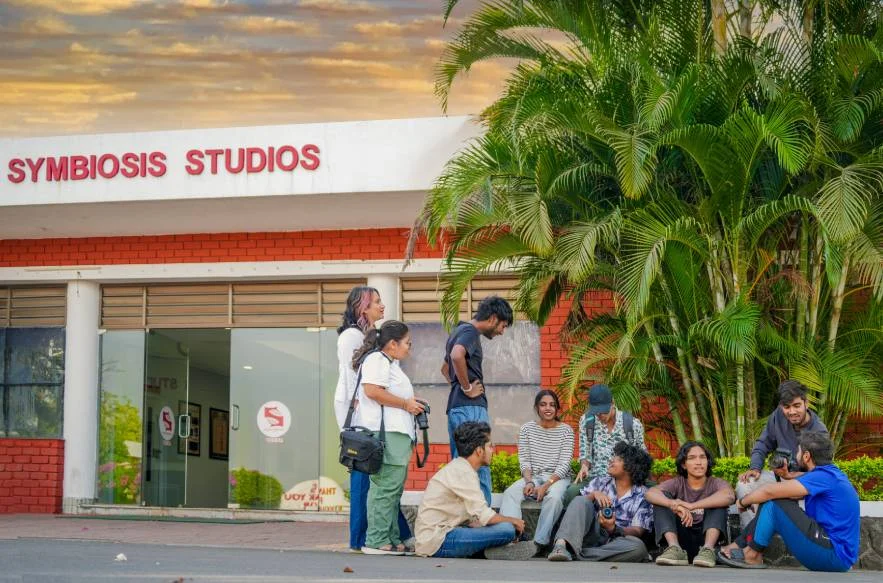
At the Symbiosis School of Visual Arts and Photography (SSVAP), filmmaking is approached as a progressive, practical and immersive learning experience within the three-year B.A. (Visual Arts and Photography) programme.
The programme brings photography and filmmaking together, enabling students to develop a broader understanding of visual communication while building specialised production skills.
Learning through practice and mentorship
SSVAP follows an immersive / practical pedagogy - real-time, hands-on and on-field learning. Students engage in practical assignments, demonstrations, workshops, masterclasses and guided projects that connect theoretical concepts with real production situations.
Learning progresses through different levels of complexity, with opportunities to work on mute films, short films, documentaries and advertising films. These projects encourage students to apply their technical knowledge, develop storytelling abilities and understand the collaborative nature of filmmaking.
Exposure to industry experts
Interaction with experienced practitioners and industry experts helps students understand professional expectations, emerging techniques and the realities of production. Repeated feedback and mentorship allow students to revisit their work, identify gaps and improve their execution over time.
Specialised infrastructure and technology
SSVAP provides specialised studios and production facilities supporting filmmaking and visual creation, along with post-production infrastructure. Access to professional cameras, lighting and sound equipment, and contemporary imaging technology gives students opportunities to learn through practical engagement.
The use of modern, AI-enabled camera features and evolving digital tools can also help students understand how technology is influencing contemporary visual production.
Real-world learning environments
Filmmaking students benefit from working in varied indoor and outdoor environments, participating in field-based learning and undertaking projects that require planning, adaptability and collaboration.
These experiences help students understand that professional filmmaking involves much more than technical operation. It requires creative judgement, communication, teamwork, problem-solving and the ability to work responsibly under changing conditions.
From Learning Techniques to Developing Filmmakers
The transition from a beginner to a capable filmmaker is a gradual process. A student may initially learn how to operate a camera, but over time must learn to choose the right lens, interpret available light, direct a scene, record clean audio, manage a crew and make editing decisions that strengthen the narrative.
Each stage builds upon the previous one. Students need opportunities to practise, receive constructive criticism, correct mistakes and apply the lessons to new projects.
A three-year undergraduate programme offers a structured environment for this progression. It allows students to explore different filmmaking disciplines, discover their strengths, build a diverse portfolio and develop the confidence to approach increasingly demanding assignments.
Ultimately, professional competence emerges from the combination of structured education, practical experience, sustained mentorship, creative curiosity and continued learning.
Conclusion: Give Filmmaking the Time It Deserves
Filmmaking is a multidisciplinary craft that combines art, technology, storytelling and collaboration. Its many dimensions cannot be meaningfully reduced to camera operation or a few editing exercises. While short-term courses and diplomas can provide only introductions or temporary training, developing broad and in depth competence across filmmaking requires time, practice and carefully sequenced learning experiences.
A comprehensive three-year undergraduate programme like BA in film making can provide the foundation for this journey by moving students from basic concepts to complex productions, from guided exercises to greater independence, and from technical experimentation to more purposeful visual storytelling.
At SSVAP, the emphasis on immersive pedagogy, practical projects, industry interaction and progressive skill development reflects this understanding: filmmaking is not simply taught in a classroom; it is learnt through sustained practice, mentorship, experimentation and experience.
For aspiring filmmakers, choosing the right BA filmmaking course should therefore involve looking beyond the duration or title of a course. The more important questions are what students will learn, how often they will practise, what projects they will create, which experts will guide them and how effectively the programme prepares them for the realities of professional production.
Because becoming a filmmaker is not about learning a handful of techniques quickly. It is about developing the judgement, versatility and creative confidence to bring stories to life.